
When it comes to growing wealth, two of the most common investment strategies are index investing and active investing. Both aim for long-term returns — but their methods couldn’t be more different.
Index investing is simple, cost-effective, and backed by decades of data. Active investing focuses on selecting individual stocks or assets in the hope of beating the market. In this guide, we’ll define index investing, compare it with active investing, and explain why more investors are switching to a passive strategy.

📘 Introduction to Index Investing
Index investing is a passive investment strategy designed to match the performance of a market index, such as the S&P 500 or the MSCI World Index.
Instead of picking individual stocks, an index investor buys a fund that holds all the companies in the index — in the same proportions.
For example, buying an S&P 500 index fund gives you instant exposure to 500 of the largest U.S. companies. This approach:
- Eliminates stock-picking guesswork
- Offers broad diversification
- Requires minimal maintenance
Index funds can be exchange-traded funds (ETFs) or index mutual funds. Because they’re not actively managed, their fees (expense ratios) are extremely low — often as little as 0.03%.

📷 Image suggestion: Pie chart showing S&P 500 sector diversification
Alt text: “S&P 500 index fund diversification by sector”
🔍 Understanding Active Investing
Active investing is a hands-on approach. It involves:
- Selecting individual stocks, bonds, or other securities
- Timing market entries and exits
- Rotating between sectors
Active investing can be done directly by the investor or through mutual funds and hedge funds managed by professionals.
The goal: beat the market’s average return.
While active investing offers the potential for higher gains, it also comes with:
- Higher fees (1–2% or more annually)
- Higher risks (concentrated bets)
- More volatility (dependent on a few big winners)
📷 Image suggestion: Stock chart illustration with buy/sell markers
Alt text: “Active investing trade strategy chart example”
💵 Costs: Index Funds vs Active Funds
One of the biggest advantages of index investing is cost.
- Index funds: Expense ratios typically range from 0.03% to 0.5% per year
- Active funds: Expense ratios often range from 1% to 2% per year (excluding trading costs)
Over decades, these cost differences compound into thousands of dollars in lost returns for active investors.
📊 Performance: Matching vs Beating the Market
- Index investing aims to match market performance. Historically, the S&P 500 has delivered 7–10% annualized returns over the long term.
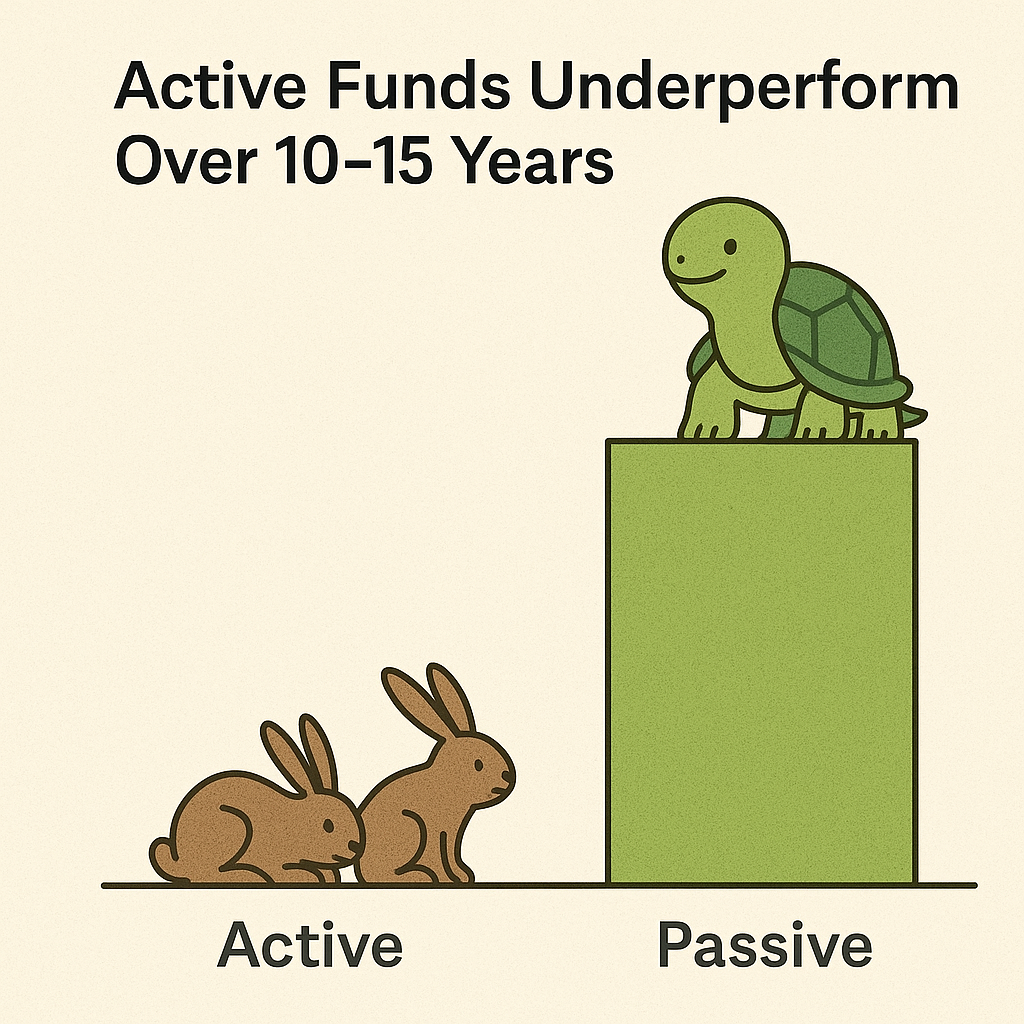
- Active investing tries to beat the market. However, according to the SPIVA report, over 90% of actively managed funds underperform the S&P 500 over 20 years.
The takeaway: Even professionals rarely beat the market after costs.
📉 Risk: Diversification vs Concentration
- Index funds spread investments across hundreds or thousands of companies, reducing the risk of any single failure.
- Active investing often concentrates capital in fewer positions, which can lead to bigger swings — both up and down.
🧠 Mindset Shift: From Active to Passive
Switching from active to index investing means:
- Letting go of the “I can beat the market” mentality
- Embracing a long-term, hands-off approach
- Trusting in market growth + compounding over decades
- Valuing simplicity over complexity

This can feel less exciting at first — but it’s far less stressful and more sustainable.
✅ Why Index Investing Works for Most Investors
- Low fees keep more of your returns working for you
- Broad diversification smooths out market volatility
- Proven track record of matching market growth
- Time efficiency — no constant research or trading

✉️ Join The Investor Compass Community
🐢 Slow and steady wins the race.
Get weekly index investing tips, mindset guides, and our free Tortoise Starter Portfolio Planner.
📩 Subscribe here and start building wealth the calm, simple way.