
Index investing has become one of the most popular ways to build long-term wealth. Backed by decades of research, it’s simple, low-cost, and highly effective. Yet, many investors still avoid it — not because it doesn’t work, but because of persistent myths.
Let’s bust the most common index investing misconceptions and explain what the data actually says.
❌ Myth #1: Index Investing Is Only for Beginners
Some believe that index funds are just for people who “don’t know how to invest.” They assume that once they gain experience, they should switch to stock-picking or active funds.
The truth: Even investing legends like Warren Buffett recommend index funds — not because they’re “easy,” but because they work for beginners and experts alike.

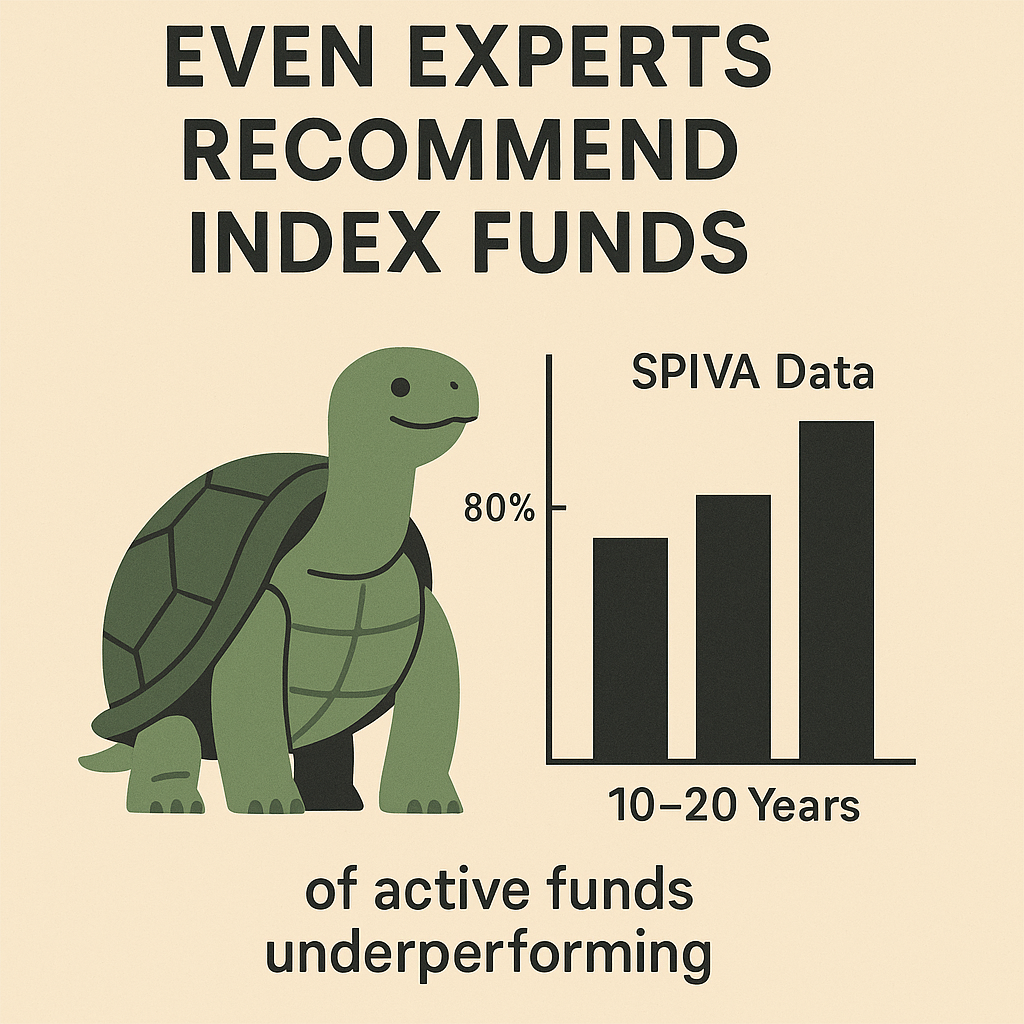
📊 SPIVA research shows that over 80–90% of active fund managers fail to beat their benchmarks over 10–20 years. If professionals can’t do it consistently, there’s no reason to think individuals will.
❌ Myth #2: Index Funds Only Deliver “Average” Returns
Because index funds track the market, some investors think they’re settling for mediocre performance.
The truth: Long-term “average” market returns are outstanding — historically, the S&P 500 has delivered ~8–10% per year. That’s more than enough to grow wealth significantly over decades.
Meanwhile, most active investors underperform these “average” returns due to bad timing, high fees, and emotional decisions.

❌ Myth #3: Index Investing Is Boring
Some think that passive investing lacks the excitement of active trading or chasing the “next big stock.”
The truth: Investing isn’t meant to be entertainment — it’s about building wealth efficiently. The more “thrilling” your investing is, the more likely you’re taking unnecessary risks (and paying for it in losses and stress).

❌ Myth #4: You Can Just Pick the Best Active Funds Instead
Many acknowledge that most active funds underperform but believe they can identify the few winners.

The truth: Past performance is not a reliable predictor of future success. The SPIVA Scorecard shows that the majority of top-performing active funds in one period fail to repeat in the next. By the time you find a “winner,” it’s usually too late.

❌ Myth #5: Index Funds Are Riskier Because They Offer No Downside Protection
It’s true that index funds fall during market crashes — but so do most active funds.

The truth: Very few managers successfully “time” their way out of downturns, and those who try often miss the recovery, which is where much of the long-term return comes from.

Index investors accept short-term declines as part of the journey — knowing markets have historically recovered and reached new highs.
❌ Myth #6: Index Investing Only Works in the U.S.
Since much research focuses on the S&P 500, some assume indexing is a U.S.-only strategy.
The truth: Studies confirm that active underperformance is a global pattern — seen in Europe, Asia, and emerging markets. Investors can build globally diversified portfolios with index ETFs that track both developed and emerging economies.

💡 The Mindset Shift: Simplicity Wins
Most of these myths stem from the belief that more complexity = better results. In reality, the market rewards patience, diversification, and low costs, not constant activity.
Index investing isn’t a compromise — it’s a proven, research-backed approach that works for the majority of investors, regardless of skill level. By dropping the myths and focusing on data, you give yourself the best chance of long-term success with less stress.
📩 Free Resource for Readers
Want to start index investing with confidence?
Join The Investor Compass newsletter to get:
- 📘 Tortoise Starter Portfolio Planner PDF
- 📊 Beginner-friendly ETF selection guide
- 🧠 Weekly behavioral tips for long-term investing success
👉 Subscribe Here and start building wealth the simple way.